
DONDON, Haiti — Adrienne Present walks into the sparse forest near her home to pick the first coffee cherries of the season: bright red marbles shimmer in the palm of her hands.
The harvest has begun.
Every morning, while it is still dark, she lights a coal fire on the floor of her house. Electricity never reached Dondon, the commune in northern Haiti where she lives.
Adrienne Present fills a pot with water she has drawn from the nearest point, a mountain spring that gushes out of a farmer’s field. She throws coffee into it, which she has dried, sifted, roasted and ground in a large mortar, the pestle, as she learned to do as a child.
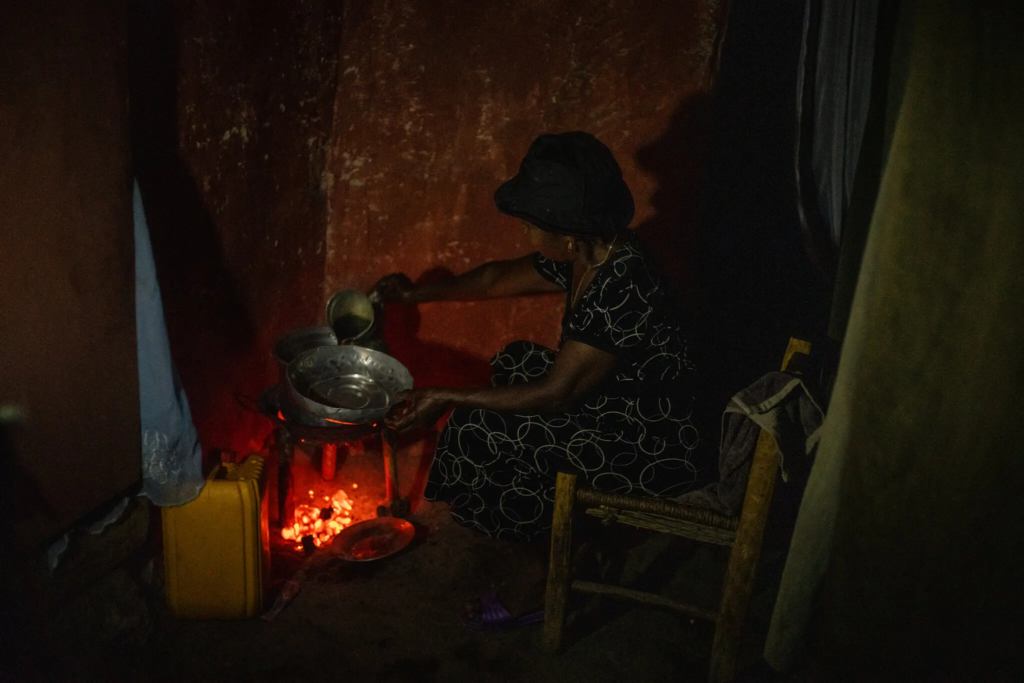
Adrienne Present prepares her coffee in the early morning at her home in Dondon, HaitiCredit…Federico Rios for The New York Times
Coffee has been at the heart of life in Haiti for nearly three centuries, when slaves cleared mountains to make way for the first coffee trees. The colony, then called Saint-Domingue, became the leading supplier of coffee and sugar to the kitchens of Paris and the cafés of Hamburg, generating exceptional fortunes for a large number of French families. In the opinion of many historians, it was also the most violent colony in the world.
Adrienne Present’s ancestors put an end to this situation in 1791 with the first victorious slave revolt in the modern world. It culminated in the creation of a new and independent nation in 1804, several decades before Britain abolished slavery or the American Civil War.
After the country’s independence, several generations of Haitians were forced to compensate the heirs of their former slave masters. Among them: the Empress of Brazil, the son-in-law of the Russian Tsar Nicholas I, the last Imperial Chancellor of Germany, and General Gaston de Galliffet, nicknamed the “massacrer of the Commune” after his bloody repression of the Paris insurrection of 1871.
This burden weighed on Haiti well into the 20th century. The wealth that Adrienne Present’s ancestors derived from the land generated immense profits for Crédit Industriel et Commercial, or CIC, a bank that co-financed the Eiffel Tower, and for its investors. From Paris, they have had a stranglehold on Haiti’s finances for decades. The CIC is now part of one of the largest financial conglomerates in Europe.
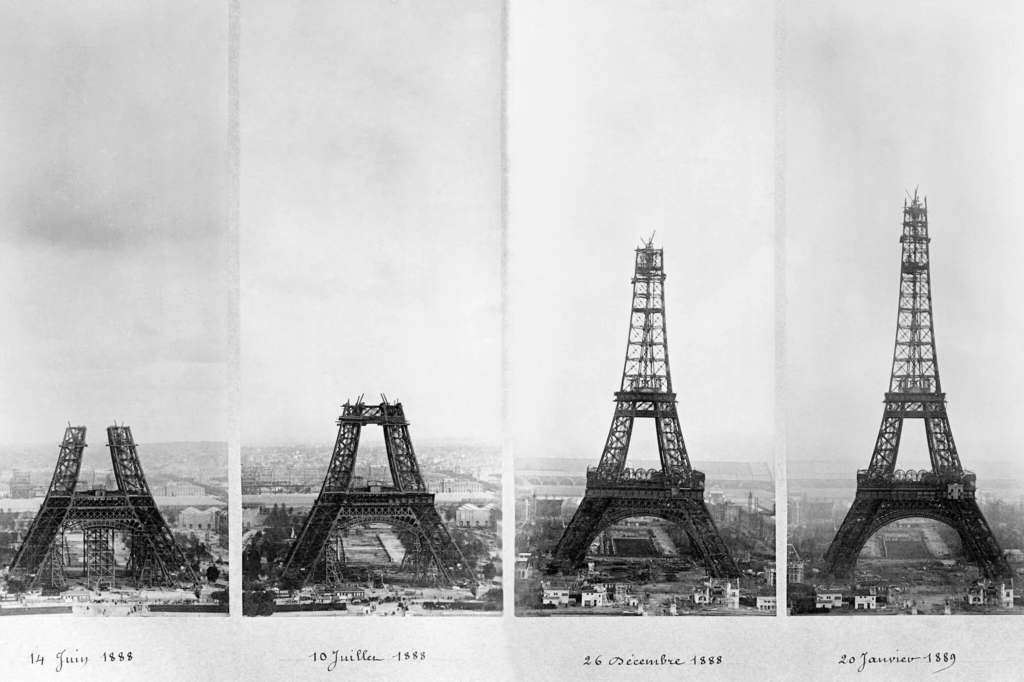
The main beneficiary of the loan to Haiti in 1875 was the Crédit Industriel et Commercial, a bank that participated in the financing of the Eiffel Tower.Credit…Agence France-Presse — Getty Images
Wall Street, too, coveted Haiti’s wealth, and it provided very comfortable revenues for the bank that would become Citigroup. Supplanting French influence, it encouraged the U.S. invasion of Haiti, which would be one of the longest military occupations in U.S. history.
Most coffee farmers in Adrienne Present’s area still don’t have running water or septic tanks. They still make do with rudimentary outhouses and prepare their diri ak pwa — rice and beans — over campfires. They deliver their coffee harvests on the backs of emaciated horses equipped with palm leaf saddles and rope reins. Unless they wear them on their heads, barefoot, to travel long kilometers of dirt tracks.
Many Haitians cannot read, including Jean Pierrelus Valcin, Adrienne Present’s husband. They have never been “sitting on a school bench”, as they say in Creole. The couple’s six children were unable to finish their schooling because the fees are too high. In Haiti, education is essentially private, as the country has few public schools.
“There is nothing here,” sighs Mr. Valcin, who is losing his sight but cannot afford to see an ophthalmologist. “Our children are forced to leave the country to find work.”
He uses a term common in Haiti — mizè. More than poverty: misery.
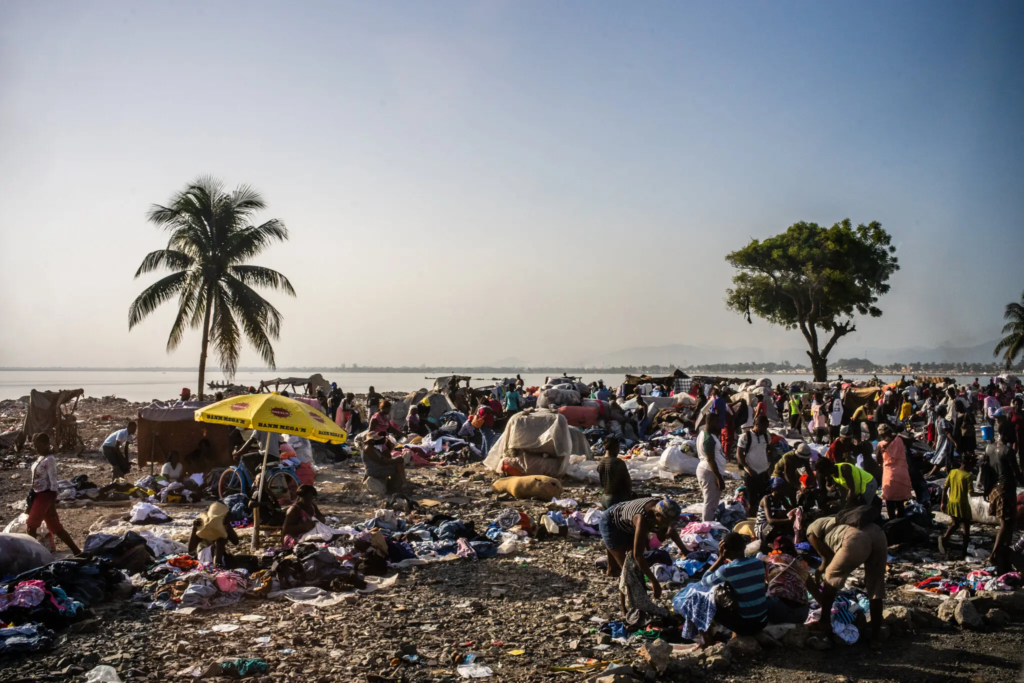
Cap-Haitien. Haiti’s “double debt”, i.e. ransom and borrowing to pay it, has pushed the country down the path of poverty and underdevelopment.Credit…Federico Rios for The New York Times
Violence. Tragedies. Hunger. Underdevelopment. For more than a century, these words have stuck to Haiti. Kidnappings. Epidemics. Earthquakes. Assassination of the president — in his room, this time.
How is it, then, that Haiti’s neighboring country, the Dominican Republic, located on the same island, has a subway, a subsidized health system, public schools, crowded resorts and long periods of economic growth?
6 things to remember
on the reparations paid by Haiti to France
Corruption is the most common explanation, and not without reason: Haitian leaders have always got their hands on the country’s wealth. Elected officials sometimes speak openly on the radio about the bribes they receive, and many oligarchs enjoy lucrative monopolies and evade taxes. According to Transparency International, Haiti is one of the most corrupt countries in the world.
But this is without taking into account another history, this one rarely taught or even recognized. Haiti, the first country whose slaves broke free on their own to found their own nation, was forced to pay for its freedom once again — in cash, this time.
Haitians have reason to take these threats seriously. Twenty years earlier, Napoleon had already tried to subdue them by sending them one of the largest military fleets ever assembled by France, under the command of his own brother-in-law. The Haitians have won the victory and proclaimed their independence. Napoleon, who lost more men there than at Waterloo, ended up recalling his troops.
But the rich French colonists, impatient to recover their lands, did not give up, and ended up finding an attentive ear for the return of the Bourbons. A minister of the Navy, a former colonist and ardent defender of slavery, went so far as to devise a new plan to enslave Haitians or “exterminate” them by means of an even larger army.
Haiti has no allies to count on. By refusing to recognize its independence, the world powers have ostracized it from the nations. U.S. lawmakers, in particular, fear that their own slaves will follow Haiti’s example and revolt.
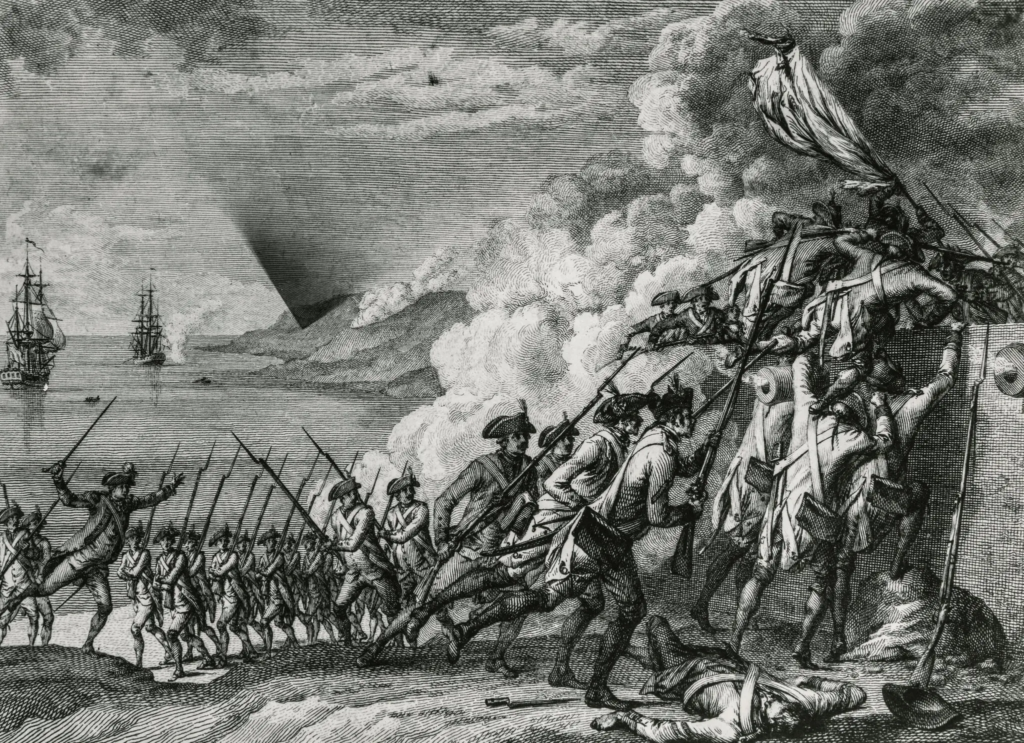
In 1802, the attack on Haiti by Napoleon’s troops.Credit…Gamma-Rapho, via Getty Images
The Haitian president then gave in to France’s demands, hoping that international recognition would ensure the country commercial prosperity and security. With this, Haiti becomes the first and only country to see several generations of descendants of slaves pay financial reparations to the heirs of their former masters.
This is often referred to as “the debt of independence”. However, the name is misleading. It was a ransom.
The sum was exorbitant compared to Haiti’s meagre means. The first payment alone, in 1825, was six times the government’s revenue that year, according to official receipts consulted by Beaubrun Ardouin, a 19th-century Haitian historian.
It was all intentional and part of a plan. Because the King of France had entrusted Baron de Mackau with a second mission: to ensure that the former colony borrowed from French banks to pay its payments.
This is known as Haiti’s “double debt”—the indemnity and the loan taken out to pay it. It was colossal, stimulating the growth of the very young international banking system of the Paris financial centre and precipitating Haiti on the path of poverty and underdevelopment. According to Beaubrun Ardouin, the bankers’ commissions alone exceeded the Haitian government’s total revenues.
And this is just the beginning. The double debt will contribute to a spiral of debt that will weaken Haiti for more than 100 years, siphon off much of its revenue, and strain its ability to build institutions and infrastructure essential to any independent nation. Generations after slaves rebelled to create the first free Black nation in the Americas, their descendants will be forced to work for little or no pay for the benefit of third parties: first the French, then the Americans, and finally their own dictators.
Two centuries later, the echo of French cannon salvos in Port-au-Prince marking the debt agreement still resonates in the country. Just look at the slums, the hospitals devoid of everything, the rutted roads and empty stomachs, even in the countryside that was once among the most lucrative and fertile in the world.
“It was a poor country that has been further impoverished by 300 years of exploitation,” laments Cedieu Joseph, his voice mingling with the song of the cicadas on his coffee plot in Dondon, not far from that of Adrienne Present. He runs a coffee cooperative named after a local hero of the revolution and compares the debt of independence to a whip wielded by France to punish his former colony for desiring, and winning, its freedom.
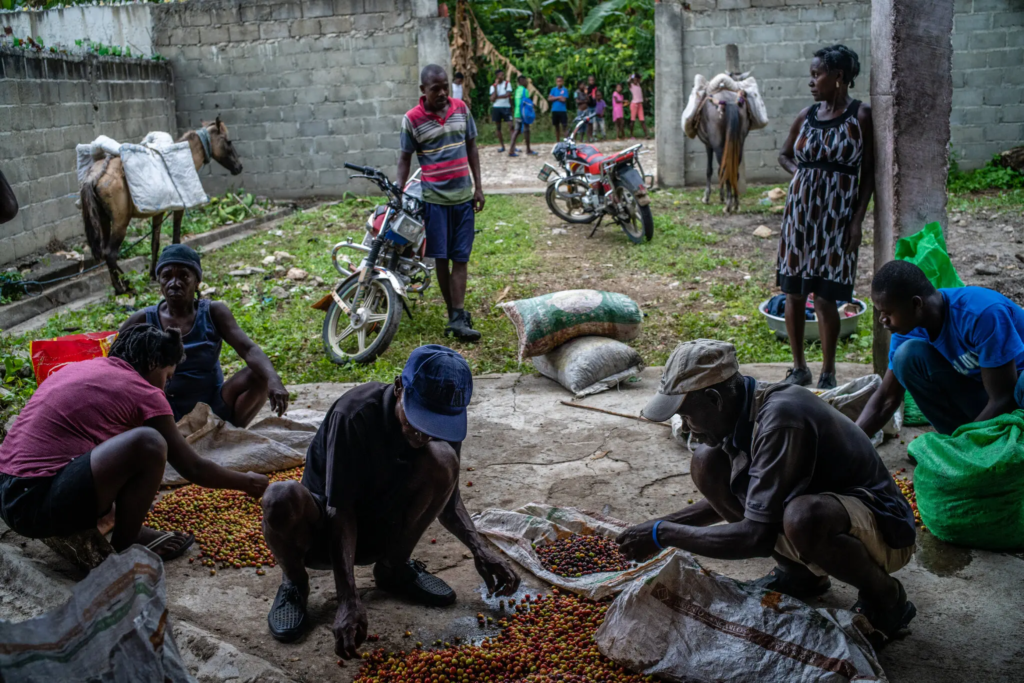
Coffee farmers sort their harvest at the Vincent Ogé cooperative in Dondon.Credit…Federico Rios for The New York Times
“The slaves fought for our independence,” he recalls. “To make them pay for this independence was to create a new kind of slavery.”
In the meantime, the double debt has fallen into the dustbin of history. France has always done nothing but minimize it, distort it, if not erase it from memory. Only a handful of academics have studied it in detail. No in-depth calculation has been attempted, according to historians, of what Haitians actually paid. Haitians themselves still do not agree on the long-term effects of debt on the country’s economy, development and political destiny.
The New York Times delved for several months into thousands of pages of government archives, some centuries old and which have rarely, if ever, been studied by historians. We dug into libraries and archives in Haiti, France, and the United States to better understand the history of double debt and its financial and political effects on Haiti.
In an approach described as a first by historians, we calculated the sums actually paid by Haitians to the heirs of their former masters, to the banks and to the French investors who held the first loan used to finance the compensation. Not only the government’s debt repayments were taken into account, but also the interest and late penalties applied over the decades.
According to our calculations, Haiti has spent about $560 million in present value terms. But this sum is far from corresponding to the real economic deficit suffered by the country. If it had remained in the Haitian economy and been able to grow there over the past two centuries at the country’s current rate of growth—instead of being shipped to France without goods or services in return—it would have brought Haiti $21 billion in the long run. And this even taking into account the notorious corruption and waste in the country.
By comparison, this is much higher than Haiti’s gross domestic product in 2020.
We shared our findings and analysis with 15 leading economists and historians who specialize in developing economies and the effects of public debt on growth. All but one validated our estimate of $21 billion, or said it was within the range of possibilities, or even deemed it too conservative. Some have proposed alternative modelling, most of which result in even greater long-term losses for Haiti.
The reason is simple: if this money had not been sent to the former slavers, it would have been spent in the Haitian economy, by coffee farmers, laundresses, masons and others. On the contrary, it would have circulated in shops, it would have been used to pay school and health fees. It would have helped to support existing businesses and create new ones. The State would have captured part of it, perhaps to build bridges, sewers and other pipes.
All of these expenses pay off over time because they grow a country’s economy. It is impossible to know with certainty how the Haitian economy would have gone, and given the frequent corrupt practices of the rulers, some historians believe that the needs of poor peasants, such as those of Dondon for example, would never have been a priority anyway.
But others say that, without the burden of double debt, Haiti would have been able to develop at the same pace as its Latin American neighbors. “There is no reason why a Haiti freed from the French burden could not have done so,” says economic historian Victor Bulmer-Thomas, a specialist in the region’s economies. André A. Hofman, an expert on the development of Latin America, also considers the scenario “very reasonable”.
If we take this hypothesis, the shortfall for Haiti is staggering, in the order of $115 billion, or eight times the size of its economy in 2020.
In other words, and according to a recent study by an international team of academics, if Haiti had not had to compensate its former masters, its per capita income in 2018 could have been nearly six times higher — and comparable to that of the neighboring Dominican Republic.
For these academics, the burden imposed on Haiti is “arguably the most odious sovereign debt of all time”.

In the 18th century, there was a French coffee plantation in Dion operated entirely by enslaved Haitians.Credit…Federico Rios for The New York Times
The New York Times calculated only the economic impact of the double debt — the reparations to the settlers and the initial loan taken out to finance them.
Haiti’s problems went much deeper than that.
Debt led to a cascade of deprivations, budget deficits, and ruinous external borrowing that affected Haiti well into the 20th century.
In 1888, when the country finally made its last payment to the former slavers, the debt was far from being settled. To pay it, Haiti borrowed from other foreign creditors. The latter, in cahoots with greedy Haitian officials who were indifferent to the suffering of their people, would take a significant part of the country’s income over the decades.
Already exhausted from having paid France for decades, Haiti is multiplying its loans. In 1911, out of $3 collected through the tax on coffee, the country’s main source of income, $2.53 was used to repay the debt in the hands of French investors, according to estimates by Haitian historians Gusti-Klara Gaillard and Alain Turnier. Their calculations agree with account books kept at the Centre des Archives Diplomatiques Françaises in La Courneuve, a suburb of Paris.
The remaining sum hardly allows us to govern the country, let alone build it.
Under the U.S. occupation that began in 1915, there were years when the budget was used more to pay the salaries and expenses of U.S. officials who controlled Haiti’s finances than to provide health care to the entire nation, which had a population of about two million.
The lifting of the American tax levy at the end of the 1940s did not change the situation. Haitian peasants survived in a state “often close to the famine line,” according to a United Nations report at the time. Just over one in six children is in school.
The country is still drowning in debt. In the 1940s, children who were lucky enough to go to school were asked to bring a few pennies to class to help repay the avalanche of loans that had overwhelmed the country since its creation.
In France, this story is passed over in silence. French school curricula do not mention the reparations that generations of Haitians were forced to pay to their former teachers, the researchers find. So when a Haitian leader raises the issue with great fanfare, the French government looks down on the matter and tries to stifle the controversy.
Jean-Bertrand Aristide is a former priest and the first democratically elected president after a long dictatorship. In 2003, with the help of television advertisements and banners in the streets, he demanded that France reimburse the sums extorted and instructed a team of lawyers to gather enough to initiate international legal proceedings. The French government responded by appointing a public commission to examine relations between the two countries. Behind the scenes, however, the commission was instructed “not to say a word in the direction of restitution,” said Thierry Burkard, the France ambassador to Haiti at the time, in an interview with The New York Times.
In the eyes of the committee, Mr. Aristide’s demands are the maneuvers of a demagogue. In its report published in January 2004, the independence debt was a simple “treaty” concluded between Haiti and France — the presence of a war armada off the coast of Haiti to impose it by force is only mentioned in the appendix.
A month later, the French government helped oust Jean-Bertrand Aristide from power under the pretext of preventing the political unrest in Haiti from escalating into civil war. France has long denied any link between the Haitian president’s departure and his request for restitution. Mr. Burkard, however, admits: “That’s probably also a little.”
The request, he added, “would have been a precedent for 36 other claims.”
The question of restitition does not disappear with the departure of Jean-Bertrand Aristide. In May 2015, during the inauguration of a memorial center on the slave trade and slavery in Guadeloupe, President François Hollande stunned his audience by describing the tribute paid by Haiti as the “price of independence”.
“When I come to Haiti,” he promises, “I will in turn pay off the debt we owe.”
The audience, which included the Haitian president at the time, stood up as one man and applauded him fervently.

President François Hollande in 2015.Credit…Philippe Wojazer/Reuters
“People were crying, African heads of state were crying,” recalls Michaëlle Jean, former secretary general of the International Organization of La Francophonie, of Haitian origin, who attended the event. “It was huge.”
But the enthusiasm was short-lived.
A few hours later, President Hollande’s entourage told the news agencies that he was talking about a “moral debt” from France to Haiti — and not about any financial compensation. France’s position has not changed since then.
“France must look its history in the face,” the Foreign Ministry told the New York Times, adding an expression of “solidarity” with Haiti. However, France has not calculated the amount of money received from Haiti over the generations.
“This is the work of historians,” the ministry said.
Haitian payments to former colonists were supposed to benefit only individual owners, not the French government. The State will nevertheless receive its share. According to official documents from the late 1900s found by The New York Times, nearly 2 million francs paid by the descendants of slaves — about $8.5 million — have joined the coffers of the French state. (The Treasury declined to comment, saying its archives only date back to 1919.)
The descendants of families who received these reparations are still, for some, part of the European elite or the French aristocracy. Among them were Maximilian Margrave of Baden, first cousin of Prince Charles; Ernest-Antoine Seillière de Laborde, former president of the Medef; or Michel de Ligne, a Belgian prince whose ancestors, close to Catherine II of Russia, built the “Belgian Versailles“, where hundreds of Jewish children were hidden during the Holocaust.
The New York Times tracked down and interviewed more than 30 descendants of families who received payments related to Haiti’s independence debt. Most say they are stunned.
“It’s a part of my family’s history that I didn’t know,” Nicolas Herzog von Leuchtenberg — Duke of Leuchtenberg and a sixth-degree descendant of Josephine de Beauharnais, Napoleon’s first wife — said in a phone interview from Germany.
The debt burden has not weighed equally on all Haitians. The country’s small elite, who now live in sheltered communities when they are not on vacation in Paris or Miami, have been very little affected. Many point out that it is the poorest who have paid the highest price — and continue to pay — since the country has historically lacked schools, clean water, electricity and other basic services.
“Even today, we are suffering from the consequences of the debt,” said Francis Saint-Hubert, a doctor who teaches at the Aristide Foundation for Democracy’s School of Medicine in Haiti and participated in Jean-Bertrand Aristide’s campaign for restitution. During a recent visit to a public hospital, he found the cupboards empty of the most basic supplies. No blood pressure monitor. No thermometer.
“We continue to pay,” he laments, “and sometimes with our lives.”
The documents that The New York Times has consulted allow us to understand the genesis of this debt and its impact throughout history. Some date back to the years before the birth of the Haitian nation.
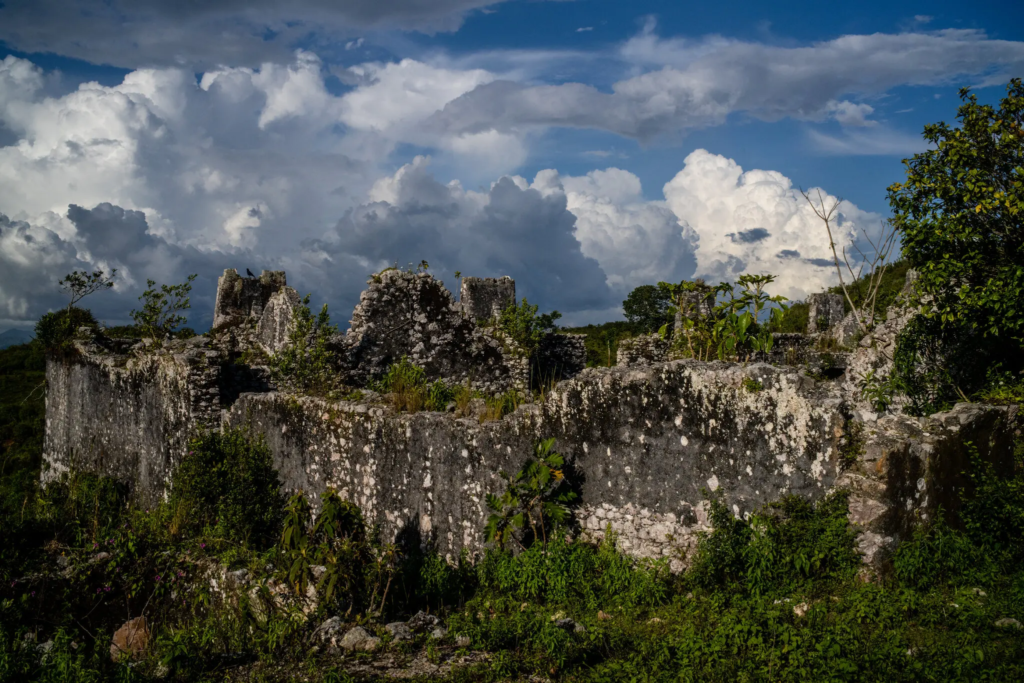
The ruins of the Dion coffee plantation, in the Matheux mountain range, northwest of Port-au-Prince. Credit…Federico Rios for The New York Times
The most lucrative colony in the world
During the time of slavery, Saint-Domingue prospered so much that Cap-Français, its largest and most important city, was nicknamed the “Paris of the West Indies”. Bookstores, cafes, gardens, elegant public squares and bubbling fountains abound. The Comédie du Cap, with a capacity of 1500 spectators, hosts 200 shows a year, many directly from Paris, as well as a large number of balls. Historian John Garrigus says that Cap-Français’ houses—with their distinctive slate roofs, whitewashed walls and courtyards—were rented for four times as much as ground-floor apartments in central Paris. The city’s port, now overrun with garbage, was at all times crowded with ships ready to cross the ocean.
The rise of this mountainous territory nestled in the western part of the island of Hispaniola, and colonized long after the other Caribbean islands, has been dazzling. Less than a century after its colonization by France, Saint-Domingue became Europe’s leading supplier of sugar. At the end of the 1730s, the first coffee plantations appeared, on the slopes of the Dondon Mountains where Adrienne Present works today.
Over the following decades, the colony became more and more dependent on slave labor. Between 1785 and 1790, Saint-Domingue absorbed 37% of the entire transatlantic slave trade. Africans torn from their homes succumbed in large numbers a few years after their crossing into the putrid and overcrowded holds of slave ships, and then their branding with the name or initials of their new masters.
Those that survive form 90% of the colony’s population. They are crushed by hunger, exhaustion and brutal public punishments. The tortures took place in one or other of the elegant squares of the island, and the colonists thronged there in crowds to see the slaves burned alive or quartered, limb by limb, on a wheel.
These sadistic punishments were so common, historians note, that they acquired nicknames: “the four-pegs”, “the hammock” or “the ladder”. There is even a technique of stuffing the slave with gunpowder before exploding it like a cannonball. They “burned a little powder in his ass”, says the historian Pierre de Vaissière, quoting a colonist’s letter dated 1736.
“O land of my country! Is there one on the globe that has been more soaked in human blood?” wrote Baron de Vastey, a Haitian officer posted to the north of the country, in a book published in 1814, “The Colonial System Unveiled.”
“To the shame of France, not a single one of these monsters has suffered the punishment due to his crimes,” he said, referring to the owners and managers of plantations by name.
In the 1780s, France tightened its legislation prohibiting masters from mutilating or killing their slaves, a sign of the degree of cruelty that the planters had reached. A few years later, 14 slaves from an isolated coffee plantation undertook a long journey to the Cap-Français courthouse to take stock of these new laws. Their master, a wealthy settler named Nicolas Lejeune, had two women tortured whom investigators found chained, their legs blackened with burns. They died shortly afterwards. Lejeune, for his part, was acquitted.
In a letter to the prosecutor, Lejeune stated that the only thing that “prevents the Negro from stabbing his master is the feeling of absolute power that he [the master] has over his person,” reports historian Malick Ghachem. “Take this brake off him, he will dare anything.”
Three years later, on an August evening, the slaves of Saint-Domingue revolted and sparked what historians refer to as the largest slave insurrection in history.
Little is known about the early days of the insurrection. One slave confessed, probably under torture, that he had taken part in a clandestine meeting in the woods with 200 others from the north of the colony. Later, in a ceremony, the insurgents will take an oath to eliminate the oppressor and the instruments of their enslavement.
All possible weapons are put to good use and new ones are fashioned. The most effective is the burning of fields and buildings of sugar cane plantations. A French surgeon describes the cloud of black smoke that invades Cap-Français, so dense that after sunset, the sky glows like the aurora borealis.
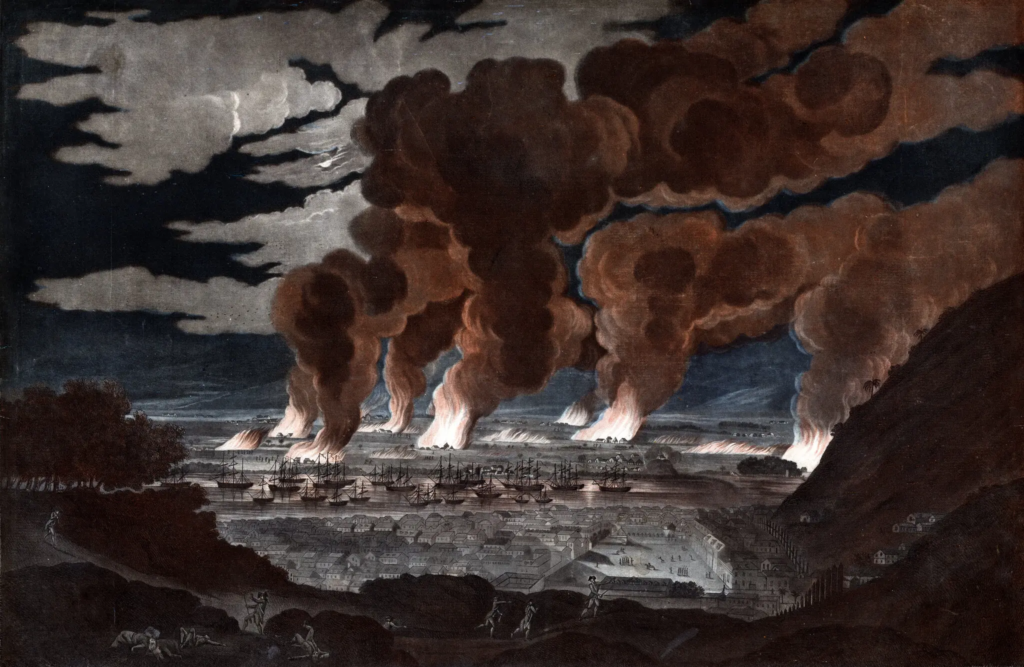
An engraving depicts the burning plantations around Cap-Français in 1791 during the Haitian Revolution.Credit…Universal Images Group, via Getty Images
Within two weeks, all the plantations within an 80-kilometre radius of the capital were reduced to ashes and the rebels, most of them in rags and a few hundred on horseback, divided into three armies. A rebel leader became infamous for retaliating the cruel punishments of slave owners, lashing the colonists with lashes and cutting off their hands.
Two years after the beginning of the insurrection, the French commissioners of the colony proclaimed that all the enslaved were henceforth free and French citizens. The decision was intended to be pragmatic: there was a lack of recruits to defend the colony against attacks from Great Britain, or from Spain, which controlled the eastern part of the island of Hispaniola. The decision was also ideological, historians note, since it reflected the revolutionary ideals that were overwhelming France at the same time.
In 1794, after the execution of Louis XVI and Marie Antoinette, the revolutionary government abolished slavery not only in Saint-Domingue but also in all the French colonies. For the historian Laurent Dubois, this was the most radical upheaval to come out of the French Revolution. However, with one nuance: for the slaves of Saint-Domingue, “it was only the end of the beginning of a long struggle for freedom.”
Napoleon, who took power in 1799, had very different views on slavery. In December 1801, he sent an armada of some 50 ships to Saint-Domingue to reimpose the French colonial empire. “Defeat us of these golden Africans,” he orders the commander of the fleet, his brother-in-law. He re-established the slave trade in the other French colonies and predicted that it would take three months to subdue the Haitians.
Instead, nearly 50,000 French soldiers, sailors and colonists died on the island, according to historian Philippe Girard. Two years after their arrival, the little that remained of Napoleon’s troops weighed anchor from the charred port of Cap-Français, which was renamed Cap-Haitien.
From Brazil to South Carolina, Haiti’s declaration of independence — the indigenous name taken over by the insurgents — brought hope to all enslaved populations, notes historian Julius S. Scott.
But for their owners, it is a formidable precedent.
“The peace of 11 states in our union cannot tolerate a victorious insurrection of Negroes bearing fruit,” Thomas Benton, U.S. Senator from Missouri, told his fellow congressmen. He explained why it was out of the question for the United States to recognize the new independent state: “No black consul or ambassador will be allowed to establish himself in our cities and parade in our country.”
Georgia Senator John Berrien declared that any official relationship with Haiti “would lead to moral contagion” compared to which the blackest plague would appear “harmless and insignificant”.

CreditCredit…Federico Rios for The New York Times
The ultimatum
Haiti knew that the French would return. Their premonition is still sealed in the high walls of the Citadel, the largest military fortress in the Caribbean and arguably the most important building in Haiti, which still dominates the Dondon coffee plantations. Standing on a green summit, the grey ramparts, now spotted with orange lichen, are 3 metres thick and 40 metres high. It looks like the prow of a huge ship ready to swoop down on the frail boats below. More than 160 cannons threaten from the loopholes and ledges.
The Citadel was erected in just 14 years in the very first years of independence by 20,000 peasants requisitioned by the new Haitian government. It is one of 30 forts built on the orders of Jean-Jacques Dessalines, Haiti’s first leader, to ward off a “possible offensive return of the French”.
This return finally arrives — 21 years after independence.
On July 3, 1825, at noon, a French warship flanked by two other ships entered the port of Port-au-Prince, the capital of Haiti.
It was Charles X, the new king of France, who sent the ships with the mission of enforcing the following ordinance: France would recognize the independence of its former colony in exchange for 150 million francs and a radical reduction in customs duties on French goods.
If the Haitian government refused to ratify the ordinance exactly as it was written, Baron Ange René Armand de Mackau was ordered to treat Haiti “as an enemy of France” and to set up a blockade of its ports. In the report written in his own hand, the baron wrote that he had been instructed to launch a military operation that “could no longer be stopped.”
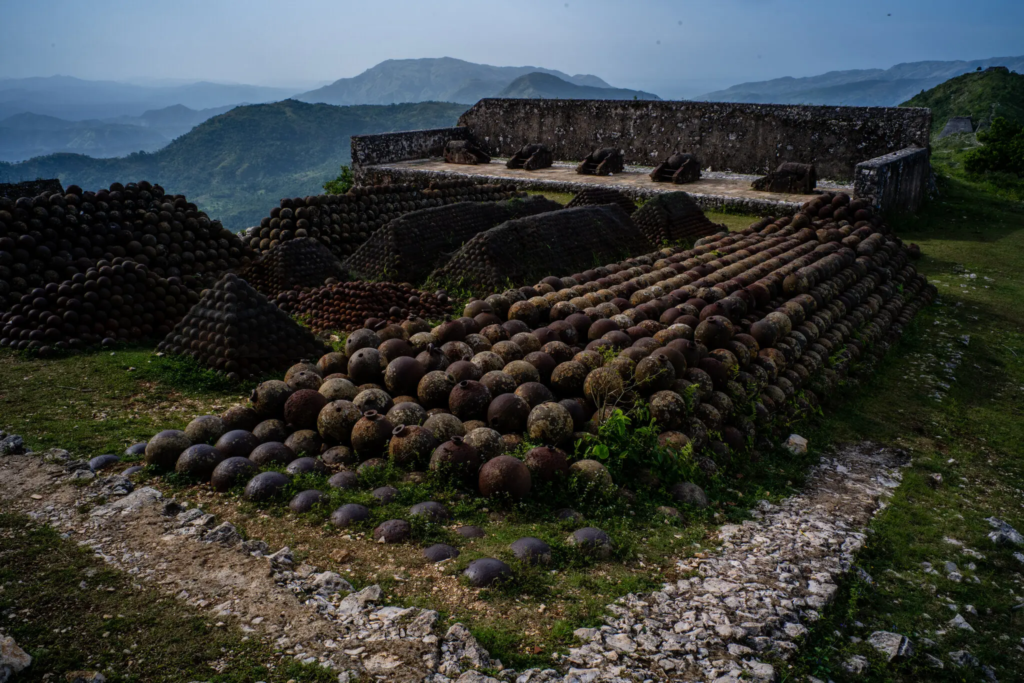
At the Citadel, cannonballs piled up in the 19th century to prevent a feared French invasion.Credit…Federico Rios for The New York Times
“I am not a negotiator,” he warns Haitian President Jean-Pierre Boyer, according to his report published this year in France. “I’m just a soldier.”
Off the coast, eleven other French warships are waiting. A general of the Haitian president urgently brought him the news, while he was in the middle of negotiations, that one of his men had spotted the French fleet.
The idea of paying France is not new. The Haitian president in office in 1814 had already put it forward to avoid what many feared would happen at any moment: a new French invasion. Deprived of trade with France, sometimes even with the United States, Boyer himself had considered a payment in exchange for Haiti’s international recognition.
But these were diplomatic negotiations. From then on, an exorbitant amount was demanded on pain of war. France’s demands are “excessive” and “exceed all our calculations,” Boyer protests, according to the baron’s report.
After three days of meetings, the Haitian president finally gave in.
Some historians dispute the idea that Boyer compromised for the sole reason of avoiding war with his people. Haitian-American academic Alex Dupuy believes the president saw it as an opportunity to enshrine the Haitian elite’s property rights to the land they had seized, and that he knew the costs would be passed on to the poor. “We must understand the pressure exerted by France on Haiti, but also the interests of the Haitian ruling class,” he stresses.
The king’s ordinance marked a real break. It is customary for war reparations to be the responsibility of the losers, historians point out. In 1815, the victors in Europe made France pay for its Napoleonic Wars, ten years before the arrival of Baron de Mackau in Haiti. After the First World War, the Allies meeting at Versailles imposed considerable penalties on Germany, which were the source of the deep resentment that would lead to the Second World War.
In the case of Haiti, it was the opposite: it was the victors who had to pay reparations even though they had broken their chains and then repulsed the assault of Napoleon’s troops. Rather than reparation, or even simply acknowledging the abuses of slavery, Charles X’s ordinance focused on the financial losses of their former masters.
In the decades that followed, Britain and other countries abolished slavery and compensated their colonists for their losses while requiring the newly freedmen to continue to work for several years for free for their former masters. The Swiss historian Frédérique Beauvois reminds us that only the United States, in the aftermath of the Civil War, freed the slaves without any compensation for their slavers.
The case of Haiti is an exception. The Haitians had already liberated themselves.
In other cases, governments compensated slave owners to lessen their resistance to abolition and prevent the economy from collapsing. But in the case of Haiti, France demands that it be the former slaves who pay.
“It was to punish them,” says Frédérique Beauvois. “It was revenge.”
The bill is excessive. In 1803, France ceded Louisiana to the United States for the sum of 80 million francs—just over half of what it now demands from Haiti. And Louisiana then extended over a very large part of the continent, encompassing all or part of 15 present-day American states. Haiti was 77 times smaller.
The Haitian government does not have enough money to pay the first of the five installments provided for in the order.
The baron therefore brought three Haitian diplomats back to France, where they sealed a loan of 30 million francs. But once the commissions were taken by the consortium of lending bankers, including the Rothschilds, Haiti received only 24 million francs.
Haitians suddenly find themselves owing not 150 but 156 million francs. Not to mention the interest.
It is one of the first of a multitude of loans issued by French banks to foreign governments that will make Paris a hub of international finance. It also served as a prototype for the takeover of the colonies after independence, as envisioned by the baron, who would become Minister of the Navy and Colonies.
“Under such a regime,” he writes, “Haiti would undoubtedly become a province of France, bringing in a lot and costing nothing.”
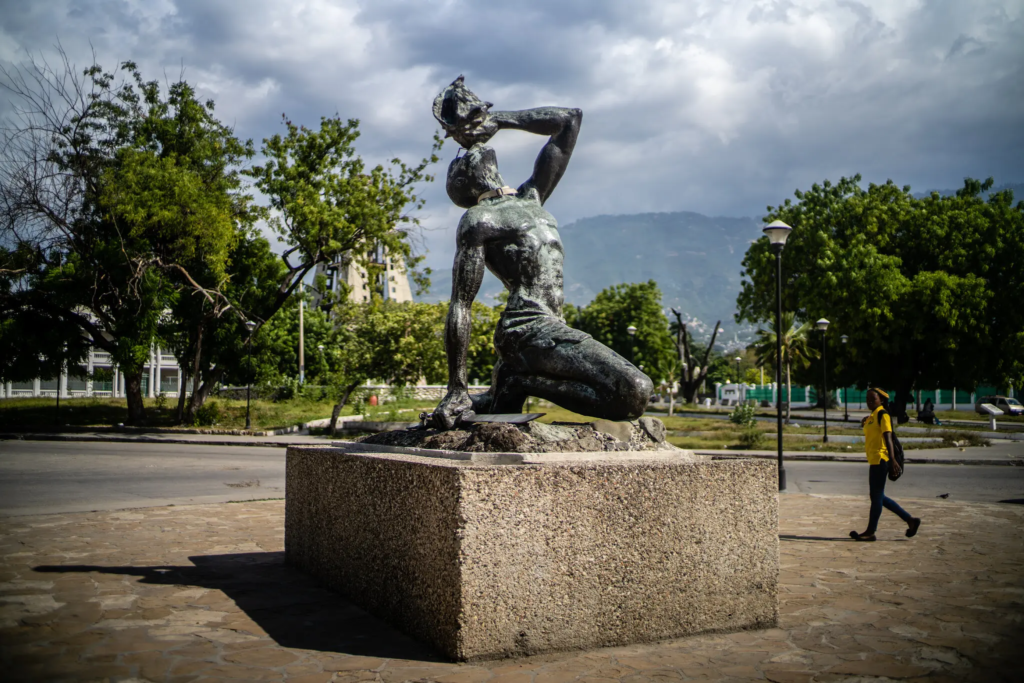
Nèg Mawon, in the central square of Port-au-Prince, the statue of a man who has fled his condition as a slave and calls for rebellion by blowing into a conch shell.Credit…Federico Rios for The New York Times
‘Reduced by death’
Paris, 1826. Charles X appointed a commission to examine the 27,000 or so claims for compensation from former colonists that had poured in more than 30 years after the Haitian revolution.
The largest compensation will go to the family of one of the most powerful slaveholders in Haiti’s history, Jean-Joseph de Laborde, Louis XV’s banker, according to German historian Oliver Gliech, author of a database on former colonists.
By the end of the 18th century, Laborde’s slave ships had transported nearly 10,000 Africans to Haiti, and he had more than 2,000 enslaved people work on his plantations. Many perished there. He was beheaded in 1794 during the French Revolution, but two of his children, Alexandre and Nathalie, received nearly 350,000 francs, or about $1.7 million in today’s dollars, in compensation for losses declared in Haiti.
Officially, former settlers are only entitled to one-tenth of the value of their lost property. But Alexandre, Laborde’s son and also a fervent abolitionist, was surprised during a parliamentary debate in 1833 by the amount of compensation, which was so high that it exceeded the real value of the losses suffered.
“With half of the compensation that would be due to me, I could buy the three houses I owned,” he told lawmakers.
The law stipulates that the commission will only compensate the French for “land”, i.e. real estate. It is understood, however, that “slaves were almost the only value in Santo Domingo” and therefore must be taken into account in the calculations. This is what Jean-Marie Pardessus, a politician who helps establish the rules of compensation, told his parliamentary colleagues.
Today, what little we know about the commission’s decisions comes from a volume of 990 pages of handwritten notes found in 2006 at the National Archives of the World of Work in Roubaix.
We discover the claims of former colonists who, as proof of their purchases of Africans on the eve of the Revolution, submitted letters from captains of slave ships or slave traders. It is also clear from reading these pages that the commissioners subtract from the amount of the indemnity the value of the slaves that the colonists took with them in their escape.
In 1828, the commission heard Philippine Louise Geneviève de Cocherel. His father, the Marquis de Cocherel, who had just died, had owned six properties in Saint-Domingue, including a sugar plantation and a coffee plantation.
This marquis had been distinguished by the Baron de Vastey in his treatise on the horrors of slavery, but the secretary of the commission recorded the losses without qualms.
In a beautiful cursive handwriting, he notes that the sugar and cotton plantations were “reduced later by death” to 220 slaves with an estimated value of 3,425 francs per head.
As for the slaves on the coffee plantation, they were “reduced to 40 per death” worth 3,250 francs each. On the main farm, 7 slaves were “reduced to 6”, valued at 2,500 francs per head.

Chains that were once used to tie up Haitian slaves on display in a museum in the capital.Credit…Federico Rios for The New York Times
In 1789, before the slave rebellion and before returning to France, the marquis bought 21 Africans who had just been taken from their homes. As no details were given as to the place where he had them worked, the commission assessed them at the average price and to the nearest centime: 3,366.66 francs.
Mr. de Cocherel’s daughter, now a young bride and herself a marquise, was finally granted an average annual payment of 1,450 francs — $280 in the 1860s — over several decades, according to the official record of the commission’s decrees.
By comparison, the average annual income of a coffee farmer in 1863 in Haiti was about $76, Haitian economist and politician Edmond Paul wrote at the time. Barely enough to afford a meal a day composed of “what is less substantial in a work of chewing.”
Just like in the days of slavery, he laments.
“Ready to fight”
The Haitian government immediately ran out of funds. To pay the first instalment of the indemnity, he emptied the state coffers and sent all the money on board a French ship to France, in bags stored in nailed boxes and strapped with iron. There is not a penny left for public services.
To recover the rest of the sum, the French government once again threatened war.
“An army of 500,000 men [is] ready to fight,” the foreign minister wrote to the France consul in Haiti in 1831, “and behind this imposing force, a reserve of 2 million.”
President Boyer’s reaction was not long in coming: he passed a law that stipulated that every Haitian must prepare to defend the country. He also built Pétionville, a green neighborhood now a bastion of the Haitian elite on a hill overlooking the bay of Port-au-Prince. Out of cannon range.
In the opinion of French diplomats, the effect of their threats is that Haiti is investing its money in the army rather than sending it to France.
“The fear of France, which naturally wants to be paid, does not allow it to reduce its military state,” reported a French diplomat in 1832.
At the end of 1837, two French emissaries landed in Port-au-Prince with orders to negotiate a new treaty and resume payments. The debt of independence was reduced to 90 million francs and in 1838, a new warship set sail for France. In its holds, a second payment which, once again, will have absorbed a considerable part of Haiti’s revenues.
The army monopolizes another important part of this income, writes Victor Schoelcher, the French politician and abolitionist. There are only crumbs left for hospitals, public works and other services of general interest. Education is financed to the tune of only 15,816 gourdes, or less than 1% of the State budget.
“And then sell himself”
The French knew from the outset that the payments would be disastrous for Haiti. Nevertheless, they continued to demand them, and for decades — with a few exceptions, especially in times of great political instability — Haiti managed to raise the funds.
The New York Times traced every payment made over a period of 64 years, sifting through thousands of pages of archives in France and Haiti, and dozens of articles and books from the 19th and early 20th centuries, including those by Frédéric Marcelin, a Haitian finance minister at the time.
In some years, France will monopolize more than 40% of the Haitian government’s revenues.
“They don’t know where to turn,” a French captain told Baron de Mackau in 1826 when he embarked a cargo of gold in Haiti.
“After trying domestic borrowing, patriotic subscriptions, forced donations, sales of public domains, they have at last stopped at the worst of all parties,” he writes. Ten years of exorbitant taxes “so out of all proportion to the realizable resources of the country, that, if each one were to sell all that he possesses, and then sell himself, we would not yet raise half of the sums demanded.”
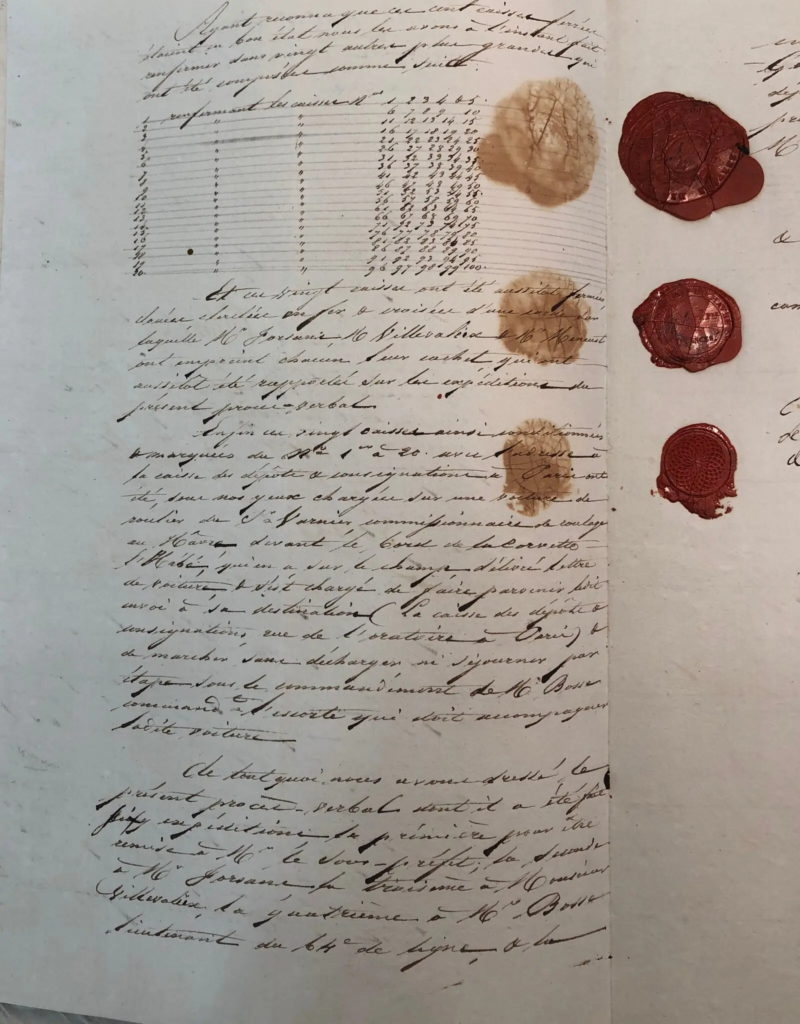
An inspection report of the funds that arrived from Haiti in 20 locked crates aboard a French vessel, in 1826. Credit…Departmental Archives of the Landes
By 1874, however, Haiti had managed to repay almost all of its double debt—the indemnity and the 1825 loan taken out to pay it—largely thanks to the coffee tax. He only has 12 million francs left to pay. To put an end to it and finally start investing in the development of the country, building bridges, railways and lighthouses, the government took out two major new loans from French banks.
The result? “A shameless waste,” protested the president of the National Assembly of Haiti at the time at the end of a parliamentary inquiry.
A loan in 1875 saw 40% of its amount taken in commissions by bankers and investors. What remains will essentially be used to pay off other debts when it is not pocketed by crooked Haitian officials who enrich themselves at the expense of their country’s future, historians say.
Far from escaping the mizè, Haitians are sinking even deeper into it.
Meanwhile, the world’s major powers, and even smaller countries like Costa Rica, are investing heavily in fighting disease and improving the quality of life of their populations. Haiti has only a few candles to build hospitals and build pipelines. In 1877, when its Department of Public Works was created, the country had only two architects and six engineers.
British diplomat Spencer St. John called Port-au-Prince “the most foul-smelling, dirtiest, and therefore most fever-ridden city in the world.” Human waste accumulates in fetid puddles in the middle of the street, he laments, while “in other countries, it is evacuated through the sewers.”
The main beneficiary of the 1875 loan was the Crédit Industriel et Commercial, one of the banks that financed the Eiffel Tower. And shortly after its first lucrative foray into Haiti, the CIC would further shape the country by taking part in the creation of the National Bank of Haiti.
The said bank is practically Haitian only in name.